
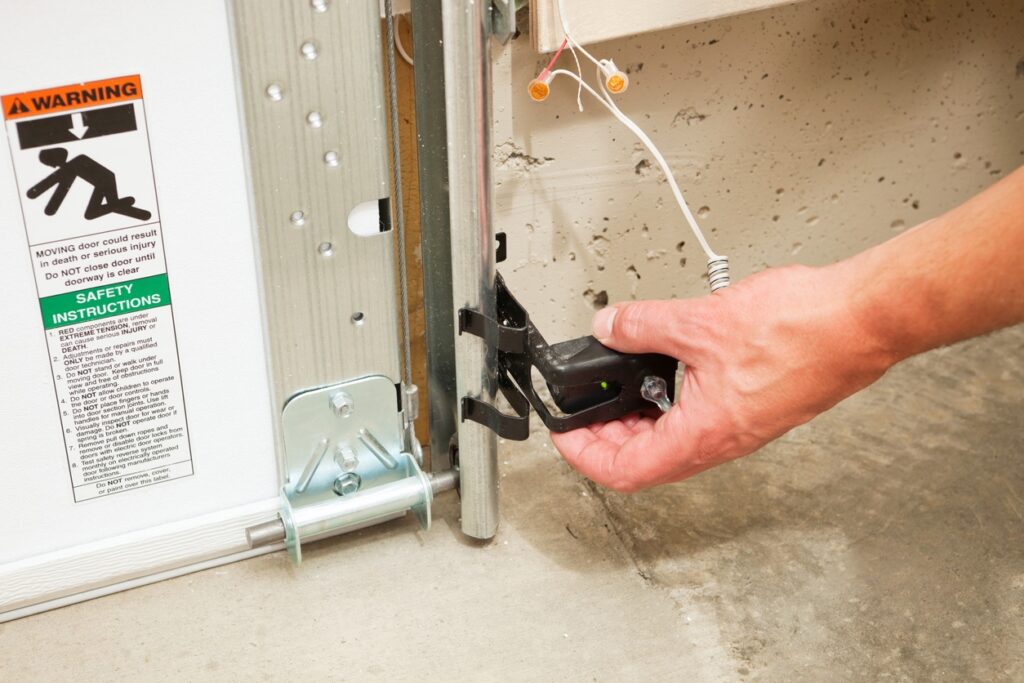
If your garage door starts to close and then reverses, or it will not close at all, the safety sensors may be the problem. Many homeowners look for answers on how to align garage door sensors after noticing blinking sensor lights, flashing opener lights, or a door that only closes when the wall button is held down.
Garage door sensors are small, but they play an important role. They help prevent the door from closing when a person, pet, vehicle, or object is in the path of the door. When the sensors are dirty, blocked, loose, or out of line, the opener may think something is in the way even when the opening is clear.
The good news is that aligning garage door sensors is often a simple check you can do before calling for professional services. If the sensors still will not work after basic troubleshooting, Mountain View Doors can help with garage door opener repair and full garage door system inspections.
The Process of Aligning Garage Door Sensors
Start by wiping off the sensor lenses and moving anything that could be blocking the beam. Then check that both sensors sit at the same height and face each other directly. If needed, loosen the brackets, adjust the sensors until the indicator lights stay solid, tighten everything back up, and test the door to make sure it closes properly.
What Do Garage Door Sensors Do?
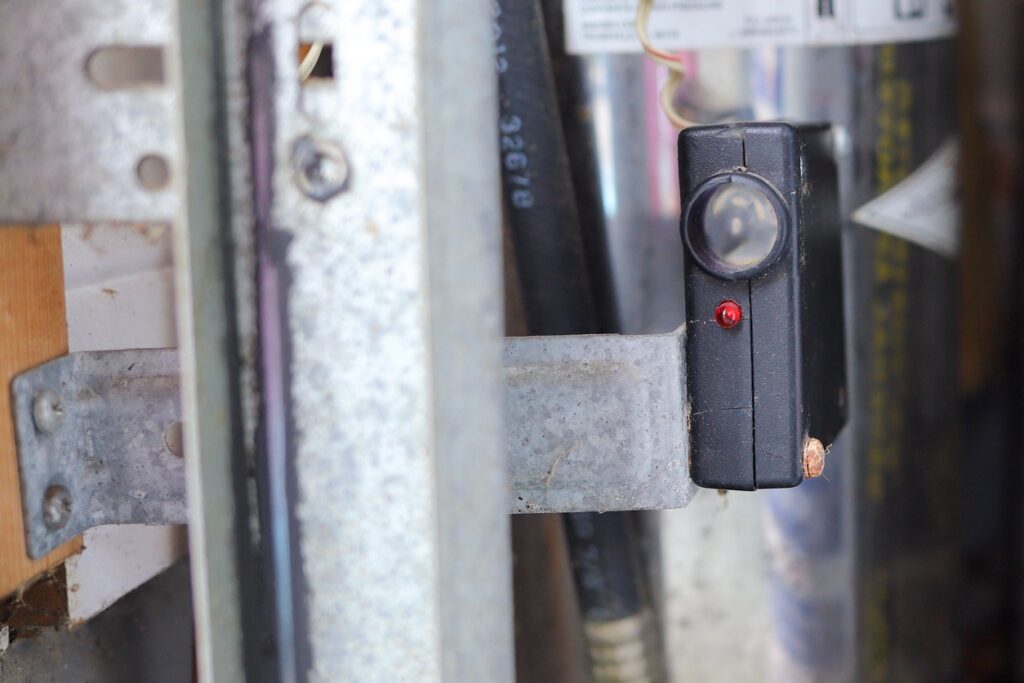
Garage door sensors are usually mounted near the bottom of each garage door track. One sensor sends an invisible beam across the door opening, and the other sensor receives it. If the beam is blocked, or if the sensors cannot see each other, the opener may stop the door from closing or cause it to reverse.
This is a safety feature, not just a convenience feature. Sensors help keep the door from closing on people, pets, cars, bikes, tools, boxes, or anything else in the way.
Most modern automatic garage doors use this type of safety sensor system. If your sensors are not lined up correctly, the opener may act like there is an object in the way even when the garage opening is clear. That is why proper sensor alignment matters.
For general garage door safety information, you can review these garage door safety guidelines from the Door & Access Systems Manufacturers Association.
Signs Your Garage Door Sensors Are Not Aligned
When garage door sensors are not aligned, the symptoms are usually easy to notice. The garage door may start moving normally, then reverse before it reaches the floor. In other cases, it may refuse to close from the remote or keypad.
Common signs include:
- Garage door starts to close, then reverses
- Garage door will not close with the remote
- Door only closes when you hold the wall button
- Opener lights flash
- One sensor light is blinking, flickering, or off
- Door closes sometimes, but not every time
- Sensors were bumped by a trash can, bike, shovel, box, or vehicle
- Nothing is blocking the door, but it still will not close
If your garage door is acting this way, check the sensors before assuming the opener has failed. That said, if the sensor lights are off, the wiring looks damaged, or the door still will not close after alignment, it may be time to schedule garage door repair services.
Read More: Signs Your Garage Door Rollers Need to Be Replaced
Tools Needed Before Aligning Garage Door Sensors
Most basic sensor checks do not require special tools. Before you start, gather:
- Soft cloth
- Screwdriver
- Measuring tape
- Level
- Flashlight
- String or straight edge, optional
Avoid working on wiring or opener components if you are unsure what you are looking at. If anything looks damaged, frayed, burnt, loose, or unsafe, call a garage door technician at (720) 851-8094.
How to Align Garage Door Sensors Step by Step
Before aligning garage door sensors, take your time and work carefully. The goal is to make sure both sensors are clean, secure, level, and facing each other directly.
1. Disconnect Power to the Opener
Before adjusting anything, unplug the garage door opener or turn off power to the opener at the breaker. This helps prevent the door from moving while you are checking the sensors.
You do not need to remove the opener or take anything apart. This step is simply about working safely.
2. Remove Anything Blocking the Sensor Path
Look between the two sensors near the bottom of the garage door opening. Move anything that could block the invisible beam.
Common items that get in the way include:
- Boxes
- Trash cans
- Bikes
- Snow shovels
- Yard tools
- Sports gear
- Storage bins
- Leaves, dust, or cobwebs
This is especially common in busy Colorado garages where seasonal items, tools, and outdoor gear are stored close to the tracks.
3. Clean the Sensor Lenses
Use a soft cloth to gently wipe the lenses on both sensors. Dirt, dust, cobwebs, moisture, and garage debris can interfere with the beam.
Do not use harsh chemicals or scrape the sensor lens. A dry or slightly damp soft cloth is usually enough.
4. Check the Sensor Lights
Restore power briefly if needed so you can check the sensor lights. Most systems have small LED lights on the sensors. The exact colors vary by brand, but the important thing is whether the lights are solid, blinking, flickering, or off.
In many cases, solid lights mean the sensors are communicating. Blinking or off lights may point to a blocked beam, poor alignment, loose wiring, or a damaged sensor.
After checking the lights, turn the power back off before making adjustments.
5. Confirm Both Sensors Are the Same Height
Use a measuring tape to check the height of each sensor from the floor. They should be mounted at the same height and facing each other across the door opening.
If one sensor is higher, lower, tilted, or angled away from the other sensor, the beam may not connect properly.
6. Loosen the Mounting Brackets
Use a screwdriver to slightly loosen the sensor mounting bracket. Do not remove the sensor completely. You only need enough movement to adjust its position.
Be careful not to bend the bracket. A bent or loose bracket can cause the sensor to keep shifting out of place.
7. Adjust the Sensors Until the Lights Are Solid
Move the sensor slowly until it faces the opposite sensor directly. You may need to adjust one or both sides.
Once the sensors are lined up, the indicator lights should stay solid. If the lights keep blinking or turning off, the sensors may still be misaligned, dirty, blocked, or affected by wiring trouble.
This is the most important step in how to align garage door sensors. Small movements can make a big difference.
8. Tighten the Brackets Carefully
Once the lights are solid, tighten the brackets without moving the sensors out of position. Do this slowly and check the lights again after tightening.
If the light starts blinking again, the sensor may have shifted while the bracket was being tightened.
9. Restore Power and Test the Door
Plug the opener back in or restore power at the breaker. Next, test the garage door using the wall button and remote.
The door should close smoothly without reversing. You should also test the safety function carefully by placing an object in the sensor path while the door is open and confirming the door does not close through the obstruction.
If the door still will not close, the issue may be more than alignment.

What Do Garage Door Sensor Lights Mean?
Sensor light behavior can vary depending on the opener brand. LiftMaster, Chamberlain, Genie, Craftsman, and Overhead Door systems may use different colors or light patterns. Still, the general idea is similar.
| Sensor Light Issue | What It May Mean |
| Both lights are solid | Sensors are likely aligned and communicating |
| One light is blinking | Alignment, obstruction, or wiring issue |
| One or both lights are off | Power, wiring, or failed sensor issue |
| Lights flicker | Loose bracket, vibration, dirt, or weak connection |
| One solid light and one blinking light | Receiving sensor may not be seeing the beam |
If the lights do not respond after cleaning and alignment, there may be a wiring issue, damaged sensor, opener problem, or another garage door system issue.
Troubleshooting: What If the Door Still Will Not Close?
If you have already cleaned and aligned the sensors but the door still will not close, look for other possible issues.
Check for damaged or loose wires near the sensors. If a wire is cut, frayed, disconnected, or pinched, the sensors may not receive power. Also look for cracked sensor lenses, bent brackets, or sunlight shining directly into one sensor.
Sometimes the problem is not the sensor at all. A garage door that is off track, out of balance, or dealing with a spring or cable issue may also fail to move correctly. If the door looks crooked, feels unusually heavy, or makes loud grinding noises, stop using it and call a professional.
Mountain View Doors can help with garage door repair services, opener problems, damaged sensors, and related issues. If your door feels heavy or only opens a few inches, you may also need garage door spring repair to resolve the issue.
Can You Bypass Garage Door Sensors?
You should not bypass garage door sensors. They are designed to help prevent injury and property damage. If you bypass them, the door may close even when something is in the way.
If your garage door only closes when you hold the wall button, that is usually a sign that the opener is detecting a sensor problem. It may be an alignment issue, blocked beam, wiring problem, faulty sensor, or opener issue.
Rather than bypassing the sensors, try cleaning and aligning them. If that does not work, schedule service so the safety system can be checked properly.
Need Help With Garage Door Sensors?
If your garage door still will not close after cleaning and alignment, Mountain View Doors can help. Our team offers reliable garage door repair services in Westminster, Colorado along with the surrounding areas. We also provide support across Denver, Parker, Highlands Ranch, Aurora, Centennial, Castle Rock, Englewood, and Littleton.
We provide sensor troubleshooting, opener repair, and complete garage door inspections for homeowners in various locations such as Denver, Parker, Highlands Ranch, Aurora, Centennial, Westminster, Castle Rock, Englewood, and Littleton.
Our team can inspect the sensors, opener, wiring, tracks, rollers, springs, cables, and overall door operation. Mountain View Doors is family-owned and operated, with more than 20 years of experience, over 800 Google reviews, and a Better Business Bureau A+ Rating. Contact Mountain View Doors at (720) 851-8094 to schedule garage door service.
Frequently Asked Questions About Aligning Garage Door Sensors
How do I know if my garage door sensors are not aligned?
Common signs include a garage door that starts to close and then reverses, opener lights that flash, sensor lights that blink or turn off, or a door that will only close when you hold the wall button. If you are seeing these issues, your garage door sensors not aligned may be the reason.
What color should garage door sensor lights be?
Sensor light colors vary by opener brand. Some systems use green and amber lights, while others use different colors. In general, solid lights usually mean the sensors are aligned and communicating. Blinking or off lights may point to misalignment, obstruction, wiring trouble, or a failed sensor.
Why does my garage door close only when I hold the wall button?
This often points to a sensor issue. The opener may think the safety beam is blocked or the sensors are not aligned. It can also point to wiring trouble, a bad sensor, or opener safety settings. If alignment does not fix it, call a professional on our team.
Can sunlight affect garage door sensors?
Yes. Direct sunlight can sometimes interfere with the receiving sensor. If the problem happens at the same time of day, sunlight glare may be part of the issue. A technician can inspect the setup and recommend the right fix.
How high should garage door sensors be?
Garage door sensors are usually mounted low on each side of the door opening, often a few inches above the floor. The exact height can vary by opener and manufacturer guidance. What matters most is that the sensors face each other directly and are properly aligned.
Can I replace garage door sensors myself?
Some homeowners may be able to replace basic sensors, but wiring, opener compatibility, and recurring alignment issues can make the job more complicated. If you are unsure, or if the sensors still do not work after replacement, it is best to call a technician.
Should I call a professional if my sensors keep going out of alignment?
Yes. Sensors that keep shifting may point to loose brackets, track movement, vibration, wiring problems, or an opener issue. A professional can inspect the full system and correct the cause instead of just adjusting the sensors again.


