
Your garage door is one of the largest openings in your home or business. If it is thin, older, poorly sealed, or attached to a heated space, it can affect how comfortable the garage feels throughout the year. That is why many property owners ask about the biggest garage door insulation benefits before replacing or upgrading their current door.
An insulated garage door can help reduce heat transfer, improve comfort, lower noise, strengthen the door, and make the garage more usable. It can be especially helpful for attached garages, rooms above or beside the garage, workshops, storage areas, and commercial spaces that need more consistent interior conditions.
Below, we will explain the main benefits of garage door insulation, when an insulated door makes sense, and how to decide whether it is the right upgrade for your home or business.
Do Insulated Garage Doors Help?
Do insulated garage doors help? In many cases, they do. An insulated garage door helps slow the transfer of heat through the door panels. That can make the garage feel less cold in the winter and less hot in the summer.
The results depend on several factors, including the condition of the garage, whether the garage is attached or detached, the quality of the door, the R-value of the insulation, and the condition of the weatherstripping around the door.
An insulated garage door will not turn an unfinished garage into a fully climate-controlled room by itself, but it can make a noticeable difference. This is especially true when the garage shares walls, ceilings, or entry doors with the inside of the home.
What Is Garage Door Insulation?
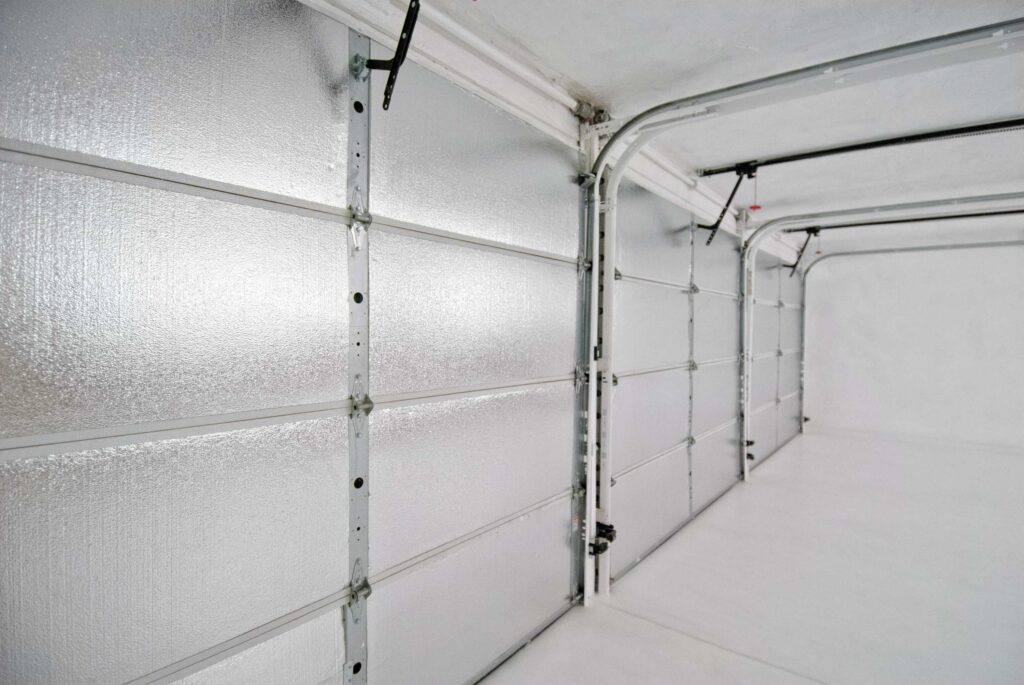
Garage door insulation is built into the door panels to help slow heat transfer. Instead of a thin, hollow, single-layer door, an insulated garage door usually has multiple layers with insulation inside the panels.
Insulated doors are often thicker, more rigid, and quieter than basic non-insulated doors. They can also help reduce the hollow rattling sound that older garage doors sometimes make.
A well-insulated door works best when the rest of the system is in good shape. That includes the bottom seal, perimeter weatherstripping, tracks, hinges, panels, and opener. If there are large gaps around the door, insulation alone will not solve every comfort issue.
Key Garage Door Insulation Benefits
There are several practical garage door insulation benefits for homeowners and business owners. Some are related to comfort, while others are related to performance, noise, durability, and long-term value.
1. Better Temperature Control
One of the biggest advantages of an insulated garage door is improved temperature control. Garages often feel extremely cold in the winter and hot during the summer because the door is such a large surface area.
Insulation helps slow down the transfer of heat through the garage door. This can make the garage feel more comfortable during daily use, especially if you use the space for storage, laundry, tools, hobbies, workouts, or a workbench.
For attached garages, better temperature control can also help the areas next to the garage feel more comfortable.
2. Improved Energy Efficiency
Another one of the major benefits of garage door insulation is improved energy efficiency around attached spaces. If the garage is connected to your home, cold or hot air in the garage can affect nearby rooms, hallways, bedrooms, or living spaces.
An insulated garage door helps reduce temperature swings inside the garage. When combined with good weather seals and proper installation, it can help limit drafts and heat transfer between the garage and the rest of the home.
3. Quieter Garage Door Operation
Insulated garage doors often sound more solid when they open and close. A thin, non-insulated door can rattle, vibrate, and sound hollow. An insulated door can help reduce that noise because the panels are usually thicker and more rigid.
This can be helpful if your garage is attached to your home or located near a bedroom, nursery, home office, or living room. It can also make daily garage door use feel smoother and less disruptive.
If your door is still noisy after upgrading, Mountain View Doors can inspect the rollers, hinges, tracks, opener, springs, and other moving parts through our garage door repair services.
4. Stronger Garage Door Panels
Many insulated garage doors are built with multiple layers, which can make the panels feel stronger than a basic single-layer door. This added structure can help reduce flexing, shaking, and rattling during operation.
A stronger door can also help improve long-term performance. While no garage door is damage-proof, insulated doors often feel more solid and durable during everyday use.
5. More Comfortable Attached Garages
If your garage is attached to your home, insulation can make a bigger difference. Attached garages often share walls, ceilings, or entry doors with interior living space. When the garage gets extremely cold or hot, that temperature can affect the comfort of nearby rooms.
An insulated garage door can help make the garage feel less harsh during Colorado winters and summers. It can also make the space more practical if you use the garage for more than parking.
6. Better Protection for Stored Items
Many homeowners use the garage for storage. Tools, sports gear, seasonal decorations, cleaning supplies, paint, lawn equipment, and household items often end up in the garage.
Insulation can help reduce extreme temperature swings inside the garage. While it does not create a fully controlled environment, it can help make the garage less exposed to outdoor temperature changes.
That can be useful if you store items that do not handle extreme cold or heat well.
Understanding R-Value for Garage Doors
When comparing insulated garage doors, you will often see the term R-value. R-value measures how well insulation resists heat transfer. In general, a higher R-value means better insulating performance.
That said, R-value is not the only thing that matters. The best garage door depends on your property, how the garage is used, and the local climate. A high R-value door will perform better when it is installed correctly and paired with quality seals around the edges and bottom of the door.
For attached garages, garages with rooms above them, and garages used as workspaces, choosing a stronger insulation option may make sense.
Types of Garage Door Insulation
Insulated garage doors are usually made with either polystyrene or polyurethane insulation. Both can improve performance, but they are not exactly the same.
Polystyrene Insulation
Polystyrene insulation is often used as a rigid panel inside the garage door. It can improve comfort, add some structure, and help reduce heat transfer.
This type of insulation is common and can be a good option for homeowners who want better performance than a basic non-insulated door.
Polyurethane Insulation
Polyurethane insulation is typically injected as foam inside the door panel. It can fill more space inside the door and often creates a more rigid, solid-feeling panel.
This can be a good option for homeowners or businesses that want stronger insulation performance, quieter operation, and a more durable feel.
Fiberglass Insulation
Fiberglass is a popular choice for effective garage door insulation due to its affordability, durability, and ease of installation. It comes in pre-formed rolls or loose bundles that can be cut to fit your garage door dimensions.
Insulation Kits vs. Factory-Insulated Garage Doors
Some homeowners consider adding an insulation kit to an existing garage door. This can help in certain situations, but it is not always the best long-term solution.
Adding insulation to an older door can change the weight and balance of the door. If the door becomes too heavy, it may put extra strain on the opener, springs, cables, and other hardware. A kit may also look less finished than a factory-insulated door.
If your current door is old, damaged, dented, poorly balanced, or already noisy, a new factory-insulated garage door is often the better choice.
Common Questions About Garage Door Insulation
What is the Easiest Way to Insulate a Garage Door?
Using insulation panels or a garage door insulation kit is the easiest method. These options come with pre-cut panels and adhesive, making installation straightforward and hassle-free.
Can I Insulate My Garage Door Myself?
Yes, insulating a garage door is a DIY project. With the right materials and tools, you can complete the insulation process in a few hours.
How to Insulate a Garage Door from Inside?
Insulate the door panels from the inside using rigid foam, fiberglass, or insulation panels. Cut the material to size and attach it to the panels with adhesive or tape.
Will Insulating a Garage Door Keep Cold Out?
Yes, insulating your garage door helps keep the cold out by creating a thermal barrier. This helps maintain a warmer temperature inside the garage during winter months.
Interested in an Insulated Garage Door? Contact Our Team
If your garage feels too cold in winter, too hot in summer, or louder than it should be, an insulated garage door may be a smart upgrade. Mountain View Doors can help you compare styles, insulation options, R-values, panel designs, window layouts, and performance features for your home or business. Give our team a call at (720) 851-8094 to receive assistance.


